Archive | policy RSS feed for this section

Avon and Somerset Police: policies, strategies and powers

23 May

Avon and Somerset police have just responded to a fine freedom of information request about their policies, instructions, strategies and powers in relation to pavement parking in Bristol (and in particular within the BS7 and BS8 postcodes). Their response is more informative by what it omits than for what it says.

Here is my summary of the questions and their answers. Refer to the FOI request for exactly what the questions were and the responses.:

Q: Details of any parking enforcement policy (or part of any policy), strategy or instruction (informal or informal) provided to officers/staff.
A: They have no particular policies, strategies or formal/informal advice and officers are expected to use their discretion taking all the circumstances into account at the time.  I know that the police in my area are hazy about all the complex and ever changing legislation even thought they have a leaflet (which is incomplete and contains errors). Judging by the rest of their response Avon and Somerset Police are also ‘hazy’ on the legislation and on at least one occasion they have concluded that parking completely across the pavement on a blind residential street is not obstruction. Also… of course there will always be informal advice/practice on  an inflammatory issue as parking where there is an absence of formal guidance.

Q: Your organisation’s responsibility and powers in relation to enforcement against pavement parking.
A: To act where they have powers, but not in response to yellow lines etc as responsibility for these has been transferred to the council. See below for details of the list of powers they identify and the apparent gaps in their knowledge.

Q: Have you undertaken an Equalities Impact Assessment in relation to the above?
A. No response provided.

In detailing their powers in relation to pavement parking they identify the following (all of which are valid as far as I know):

  • Highways Act 1980 (section 137.1) Wilful obstruction of a highway by a motor vehicle £30 non endorsable)
  • Road Vehicles Construction and Use Regulations 1986 (regulation 103) Cause unnecessary obstruction by motor vehicle /trailer £30 non endorsable
  • Road Traffic Offenders Act 1988 (section 52) Powers to issue a fixed penalty notice
  • Road Traffic Act 1988 (section 19.1) Park an HGV partly/wholly on a footway/verge £60 non endorsable
  • Road Traffic Act 1988 (section 22) Cause vehicle to be left in a dangerous position. £60 endorsable
  • Road Traffic Act 1988 (34.1b) Drive vehicle on a footpath/bridleway etc. non endorsable. £30 offence
  • Road Traffic Act 1988 (section 42) Cause unnecessary obstruction by motor vehicle /trailer £30 non endorsable
  • Road Traffic Offenders Act 1988 (schedule 2) Cause unnecessary obstruction by motor vehicle /trailer £30 offence

They do, however, fail to mention the following additional powers which I believe are relevant:

  • Highways Act 1980 ( Section 148 and Section 149) it is an offense if ‘a person deposits any thing whatsoever on a highway to the interruption of any user of the highway without lawful authority or excuse‘
  • Road Traffic Act 1988 Act (Section 21). An immediate offense to park ‘wholly or partly’ on a share-use path
  • Zebra, Pelican and Puffin Pedestrian Crossings Regulations and General Directions 1997 (Section 18 and schedule 4). Pedestrian crossing (including the area marked by the zig-zag lines. Enforceable by police even in civil enforcement areas (The Civil Enforcement of Parking Contraventions (England) General Regulations 2007 – Section 7.1).
  • Traffic Management Act 2004 (section 86). Dropped kerbs for pedestrians to cross road (including places where the carriageway has been raised to meet the level of the pavement).
  • Highway Code (rule 238) prohibition of parking, waiting, stopping or setting down/picking up on School zone (identified by the yellow zig-zag lines).
Confirmation again that motorists come first…

18 May

Having been rebuffed by the council waste team in relation to my request that bins are not left after collection where they obstruct pedestrians in what I consider to be an illegal manner I decided to ask one of the bin men themselves why they left them on the pavement rather than within the property. He was initially a bit defensive but then said ‘the first thing we are told is not to block driveways because otherwise motorists will have to stop in the road to move them and it will cause havoc‘. He also claimed that they never obstruct the pavement, by which I assume he meant ‘totally block the pavement’. He acknowledge that they did also leave bins on the pavement even where there was already a car on the driveway so it was unlikely that it would ’cause havoc’ to put them back where they got them from!

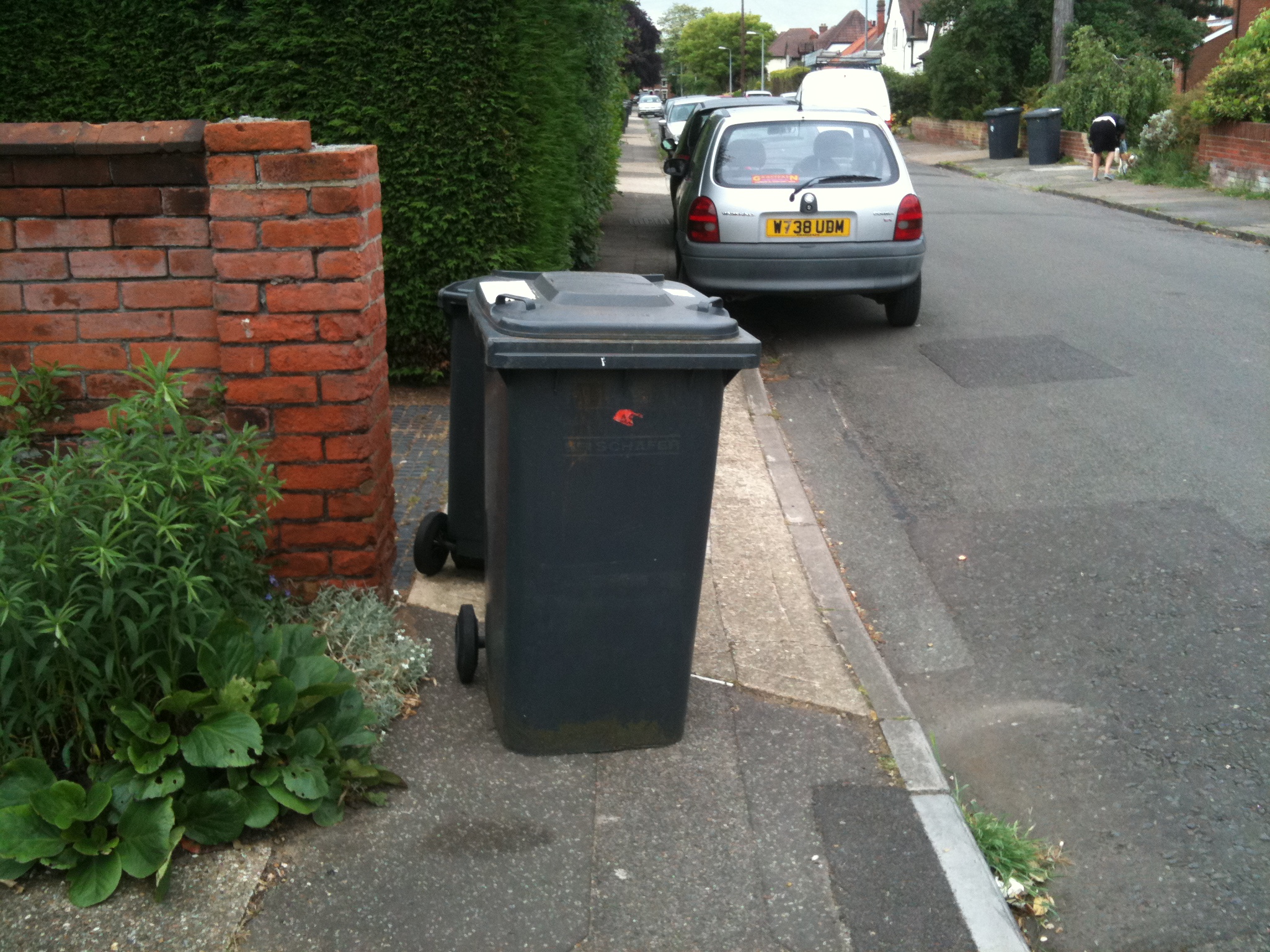
I then took a walk up the pavement to see how usable it was and it didn’t take long to find this example where there was only 400mm between the edge of the bin and the kerb, which is about half the width of a typical external door to a house! Two photos, one where the binmen had left it and another where I consider that they should have left it.

400mm remaining

Where they should have left it

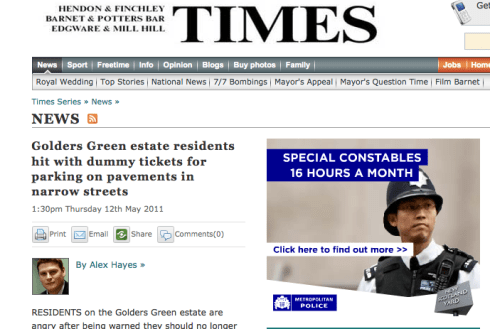
Barnet in a tizzy

13 May

Barnet seem to be getting in a right state over pavement parking and road safety which is unfortunately one of the worst in London. According to an article published yesterday in a local paper the police have again been issuing dummy parking tickets to motorists who park on the pavement. The local (conservative) council explained that the notices were handed put because of complaints from pedestrians. The Labour party environment spokesperson has rather strangely come out on the side of the motorists saying ‘This is the Barnet Tories once again coming down heavy handed, using a hammer to crack a nut. Why don’t they listen to residents and come up with a scheme that benefits everyone?‘. A Conservative councillor has said that he is pushing for a scheme to allow residents to park on the paths and has asked for no tickets to be issued until one is drawn up. Umm… ok, so we will stop illegal parking once we have made parking on the pavement legal? Is that how it will work?

And then one angry motorist says it will be very dangerous and people we die: “If we’re forced to park on the road there’s going to be hell to pay. The other day an ambulance tried to get down Cheviot Gardens but there were two cars on the road and they had to knock on neighbours doors to get them to move. That’s a life and death situation and it’s crazy. By coincidence another article in today’s edition of the same paper highlighted the borough scary road safety record; nine were killed and 1,520 injured in traffic incident in the borough during 2010 including 241 pedestrians and 82 cyclists (up 32% on 2009). In neighbouring Harrow there were just two deaths and 551 casualties in the year and in Enfield had seven deaths and 1,075 hurt. That is a lot of people!

Fake parking tickets

The hedge will have to go!

13 May

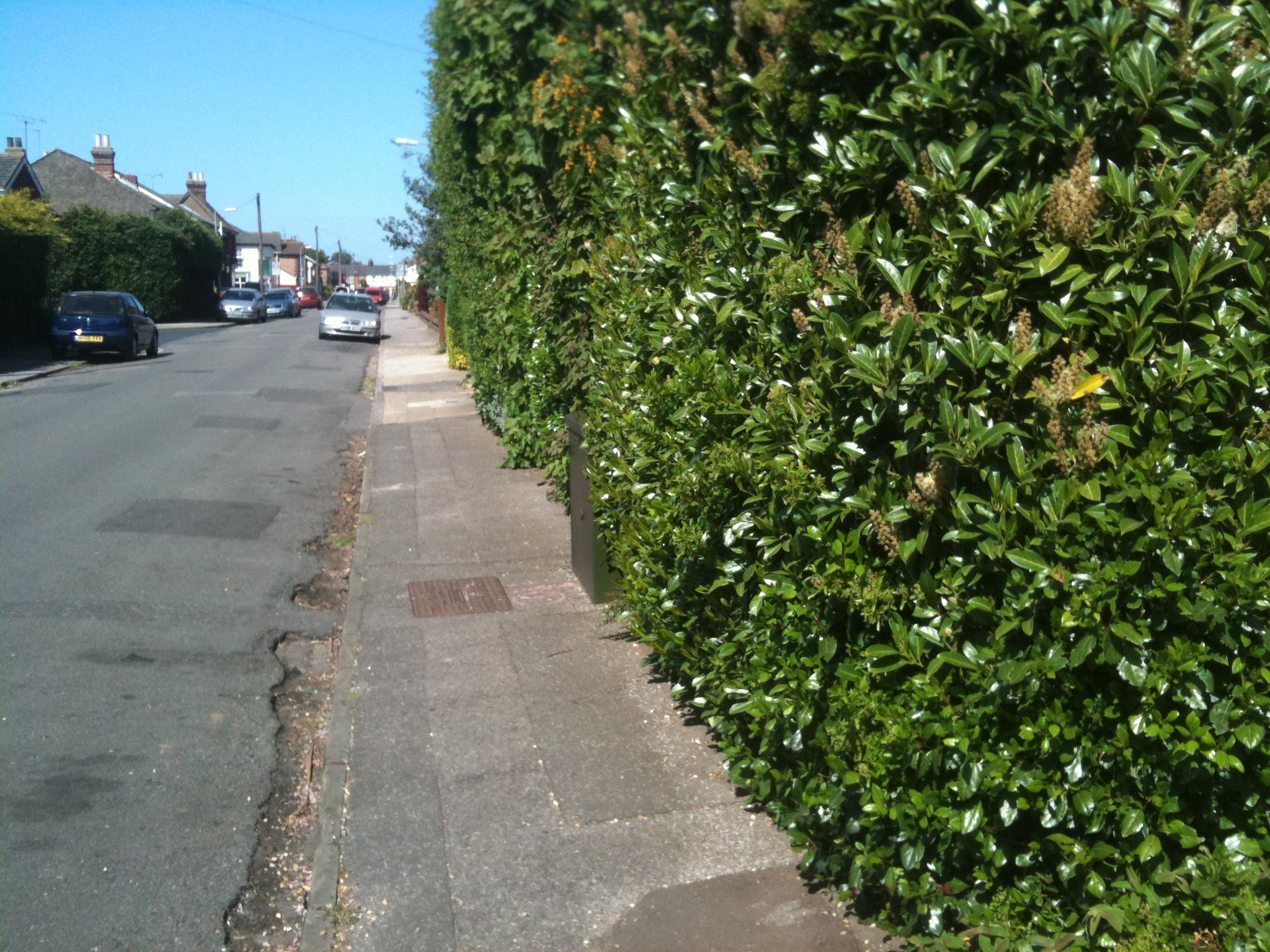
A neighbour of ours has a particularly impressive and well cared for hedge. It is tall, healthy and has possibly got a little wide. So… Ipswich Borough Council in their wisdom wrote to the owners asking them to cut is back. The owners refused. Here it is still there in all it’s glory.

The hedge (and the electrical cabinet)

There is one other teeny weenie problem with trying to get down this particular section of pavement which is that some motorists think that it is the perfect place to leave their cars over night, at weekends and indeed on many weekdays. The council do nothing about this and don’t even mention that it is a problem in the parking section of their website in the way that many other councils do.

A very obstructive hedge!

Obviously the hedge will have to go!

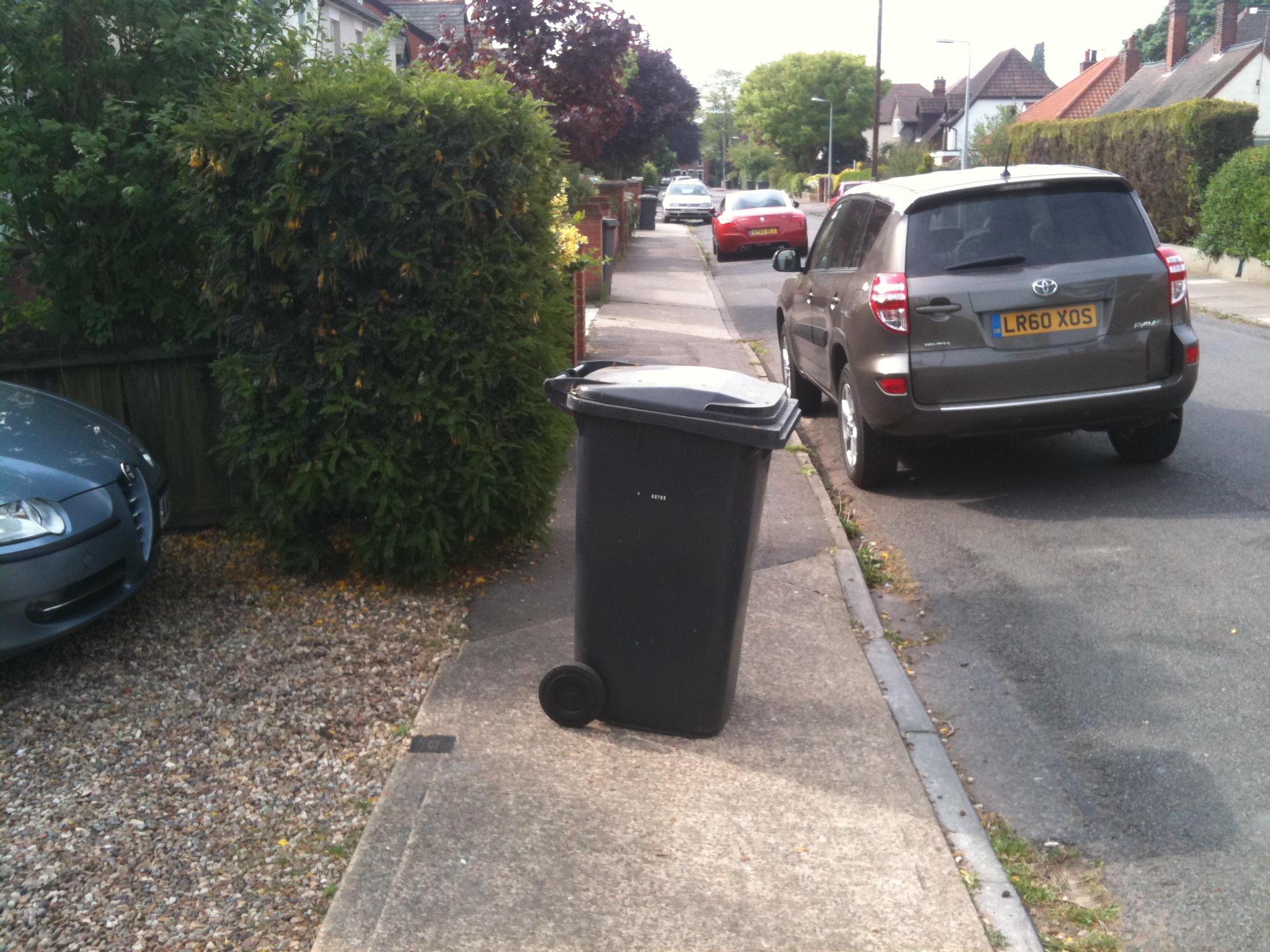
In addition to the cars, the council policy is to leave bins across the pavement to avoid blocks driveways after then have been emptied. The council has refused my request for a meeting to discuss the issue and has also stated that they have no intention of changing their policy as this might lead to damage to cars and claims for compensation from them from motorists. Here is a typical example for how bins are currently being left by the council on this street every week.

A good place for the council to leave an empty bin after collection!

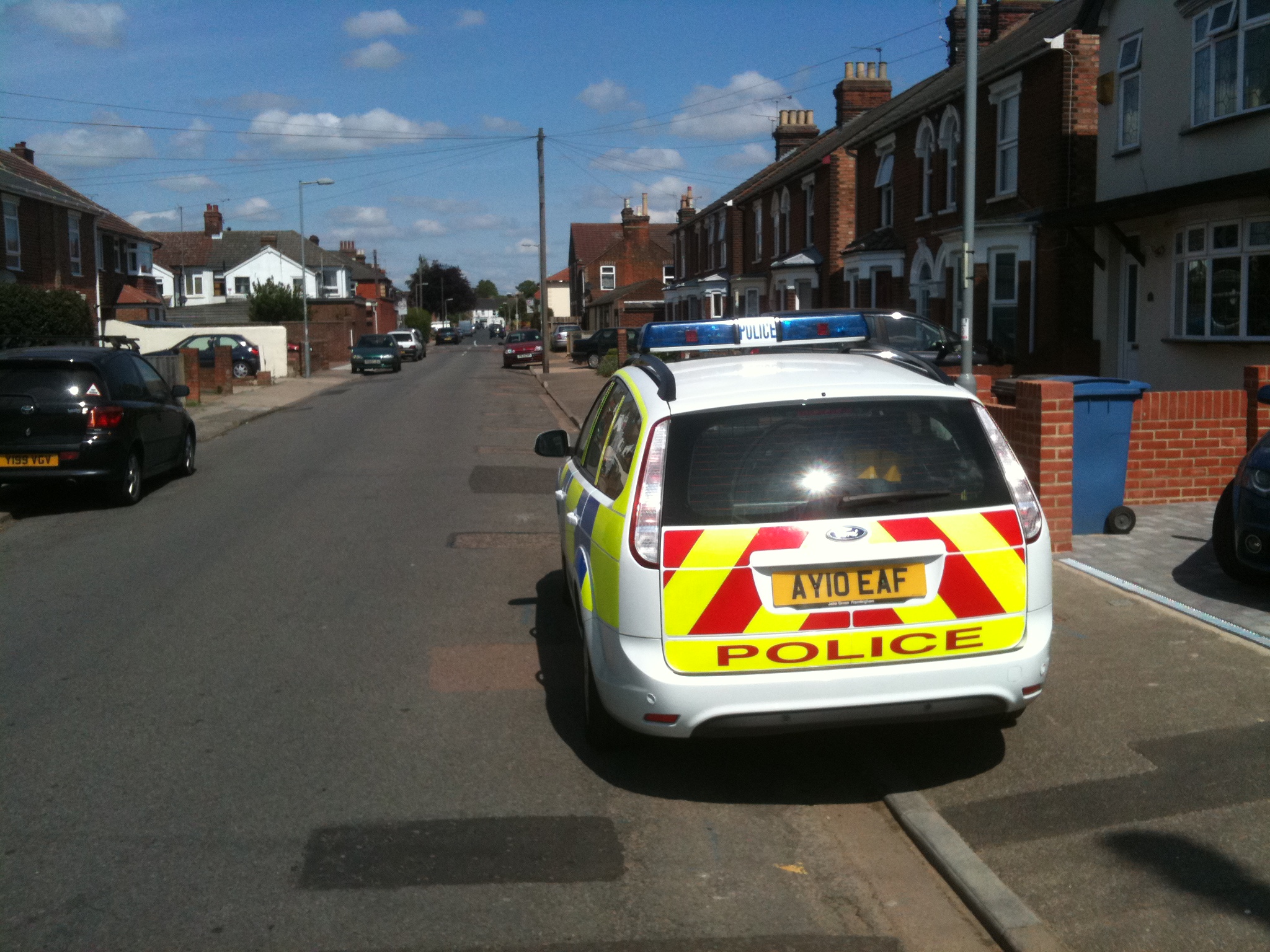
How about the police? I am pleased to have their full support of this campaign, however very regrettable I also spotted this ‘safer neighbourhoods’ police car parked needlessly across the pavement in the next street sending out all the wrong messages earlier this week!

That’s how you do it! make sure you always leave the carriageway clear

Challenging the local bin policy

5 May

I have now had a response to my query to Ipswich Borough Council in regard to why bins are left in just about the worst place they could be for pedestrians by their contractors after they have been emptied. The council confirmed that their contractors are instructed to leave bins “on the curtillage of the property… not obstructing residents’ driveways, preventing usage of drop kerbs etc” which they described as being the ‘safest position‘ as it didn’t risk damage to cars which she considered would be the case if the bins were left in line with the parked cars as I had proposed. Not a single mention of the needs of pedestrians in general and the blind and wheelchair users in particular. Not exactly what seems to be  required under the Equalities Act 2010 which came into force in October 2010 and provides ‘A basic framework of protection against direct and indirect discrimination, harassment and victimisation in services and public functions; premises; work; education; associations, and transport‘.

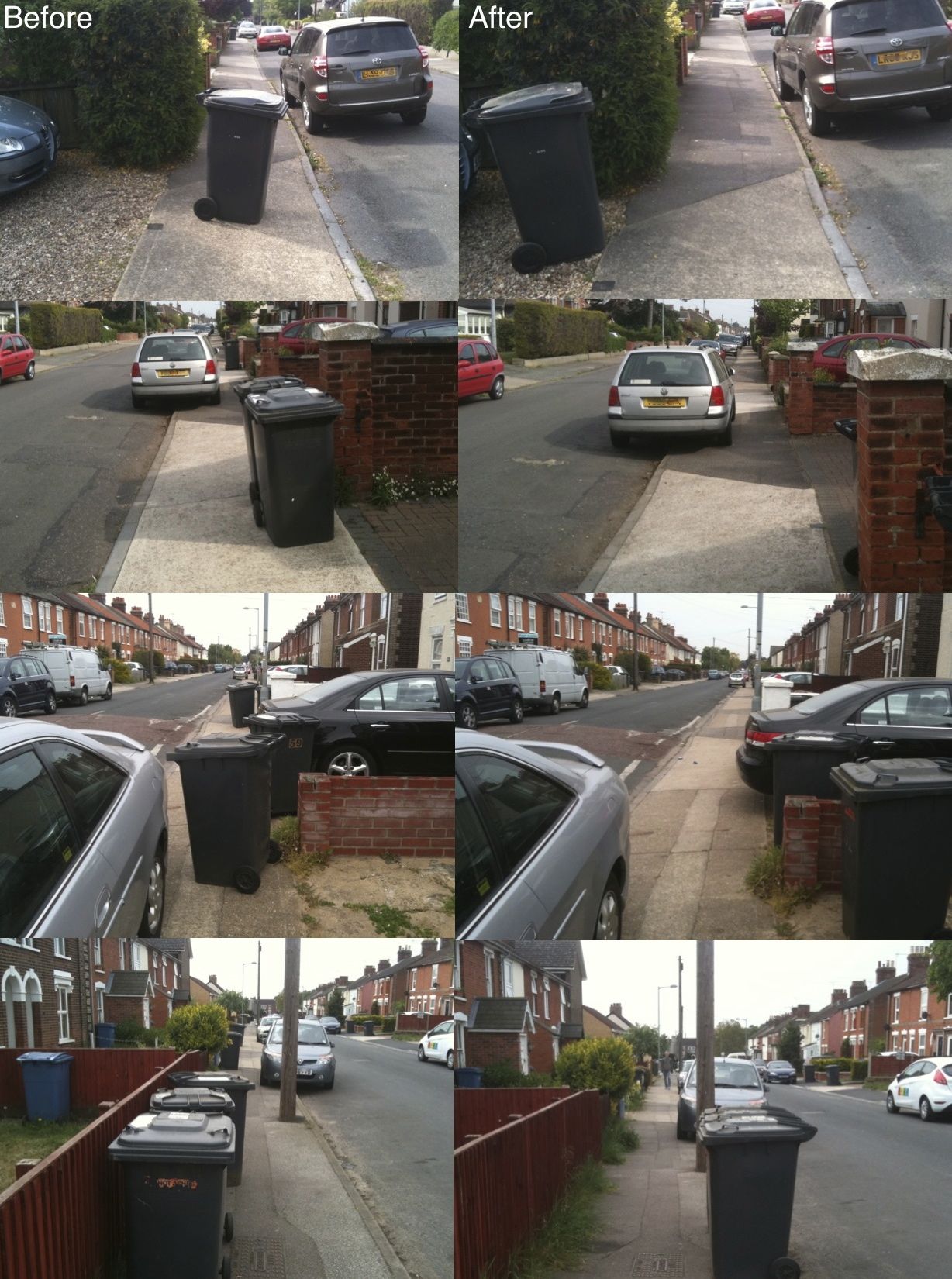
As it happened it was bin-day today and also polling day today so I was able to sample a few pavements on the route to my local polling station just after the bins had been collected. As you can see from the pictures below (on the left ) the bins were generally left in a position where they were obstructing the pavement. I moved them to a more sensible pave where I proposed that they should be left (on the right) which was often on the relevant driveway only a very short distance from where it had been left by the binmen.

Bins after collection (as now on the left, and as proposed on the right)

Update: Since making the above post I have noticed that the contractors leave bins in a much more obstructive way than the householders did. Check out the pictures below – the images on the left were taken just before the bin collection showing that the householders left them on the edge of their property sensibly, the images on the right show how to binmen then left them all over the footway.

Before bin collection on the left and afterward on the right

Conservative promise to clamp-down on pavement parking in Reading

26 Apr

The Conservatives in Reading are promising that the council will be empowered to tackle inconsiderate parking on pavements and cycle paths if they retain control after the May elections. Labour previously insisted on a delay to the implementation of the scheme and another round of consultation and for all streets where there isn’t adequate off-street parking to be exempted. They defined ‘adaquate’ as meaning that “all households within the road having off-street parking for one or more vehicles – and the road is not wide enough to allow vehicles to park on either or both sides of the street without obstructing the road“. If that was the case the I guess a pavement parking ban wouldn’t be needed!

I certainly find it strange to see the Conservatives batting on behalf of the pedestrians an Labour opposing. They are also promising to a ‘London-style’ cycle hire scheme, more 20 mph speed zones where there is local support and for the removal of unnecessary traffic lights. Before you assume that removing traffic lights will always be bad for pedestrians, do check out this video. Very surprising results although not everyone was happy. In my town they removed a set of traffic lights with good results as well.

Dog poo on the pavement leads to £1,000 fine, car storage is free!

30 Mar

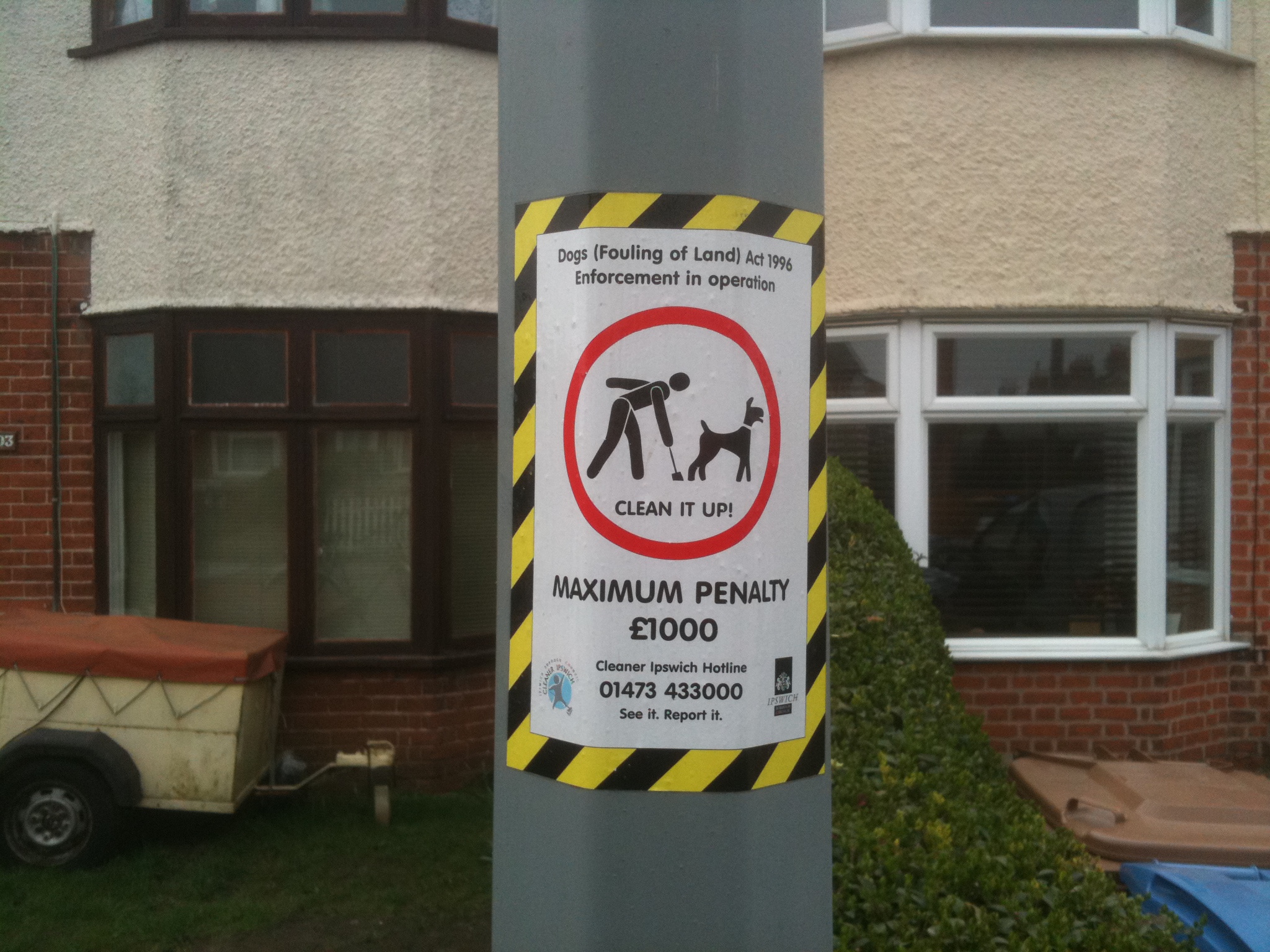
Here is an interesting insight into our culture. Scene. A car parked in residential street in Ipswich well across the pavement next to a lamp post on which there is a sign warning of a £1,000 fine for letting your dog poo on the pavement. Ipswich Borough Council recently even pledged to ‘wage war against irresponsible dog owners‘. Clearly the council means business when it comes to dog poo!

Unfortunately this is not the case when it comes to ‘fly-parked’ cars littering the pavement. There is no effective legislation to stop it and the Borough Council doesn’t even mention that pavement and verge parking should be avoided on their website. Imagine how different things would be if there was also a £1,000 fine for leaving a car on the pavement! People would certainly stop doing and would also probably look back wistfully to a time when the maximum fine was £30 – £70.

£1,000 fine for dog poo but cars allowed

Dog poo on the pavement is taken very seriously

Paris chic and rectangular bananas

28 Mar

The EU has plans to ‘phase out conventionally fueled cars‘ in urban areas in Europe by 2050 and to be moving close to eliminating deaths by road accidents. Sounds interesting but it is realistic? Well, in Paris they have been getting on with it while in Britain the government has rejected these proposals while muttering about rectangular bananas and about not getting involved in individual cities’ transport choices.

In Paris they are in the final stages of implementing a very chic and well ‘French’ scheme that is making great strides in that direction. Having had huge success with their ‘velib’ scheme they are about to introduce a fleet of 3-4,000 ‘autolib’ electic ‘Bluecars’ which will be available on short term hire from 1,000 locations. These are not going to be any old electric cars either, they are being manufactured by Pininfarina (who also work for Ferrari, Maserati, Rolls-Royce and Jaguar). It will be possible to hire a vehicle from one station and leave it at another.

One of the justifications the French authorities give for the scheme is it will reduce parking pressure in the city where 95% of cars in Paris are parked at any one time and where some 16% of vehicles are used less than once a month. Reductions in traffic (which is down 25% in the last decade) will probably mean that the mayor will be able to remove 1.2 miles of left bank expressway in central Paris (from the Musée d’Orsay to  the Alma bridge) by 2012 thereby creating 35 acres of new recreational space and cafes.

Meanwhile in London the Government is saying that it won’t get involved involved in individual cities’ transport choices. Personally, can can’t see how any national government can avoid  getting involved in these choices and this current government is certainly doing so at one level; as well as providing much mood music about cheaper motoring, faster motoring, on ending ‘the war on the motorist’ and relaxing planning restrictions it also instigated the removal of the strategic and successful M4 bus lane on the western approach to London without even consulting with Transport for London. It is subsidising the purchase is 60,000 private electric vehicles with £300m of public money which will no nothing to alleviate parking pressures or congestion. The UK government needs to recognise that in the information age it is increasingly irrelevant what we own as long as we can access what we need when we need it.

Many of us need a car from time to time but most private urban cars spend a huge amount of time doing nothing except getting in other people’s way. Car sharing schemes eliminates parking grief but do need serious support from government and until the UK government starts paying serious attention to car clubs and other sharing schemes then we aren’t going to make much progress. The switch from petrol/diesel fuels to electric propulsion is a perfect time to also move from an ownership model to a rental one.

Official, nearly no-one drives on the pavement!

7 Mar

A month ago I made a Freedom of Information request to Suffolk Constabulary asking how many drivers had been prosecuted for  driving on the footway (pavement) and separately how many drivers had been prosecuted for ostructing the pavement.

The police came back initially saying they that they were not able to disagregate driving on the footway (pavements) from driving on footpaths/bridleways etc, they also couldn’t disaggregated prosecutions for driving a motorbike on the footway/footpaths from driving 4 wheel vehicles. In relation to obstruction, they said that they could not disaggregated obstructing the pavement from obstructing the carriageway. This is unfortunate as is disguises the underlying issue I was wanting to look at.

Anyway… what were the results. In 2009 there were a total of six prosecutions for ‘driving/riding a vehicle on the footway’ and in 2010 this had risen were eight for the county.  Given that we do have some problems locally with kids taking motorbike and mopeds onto the heaths and common land I would suggest that few if any of these prosecutions are in relation to driving a car onto the pavement for the purpose of parking it there. Probably none?

Prosecutions for obstructing the footway/carriageway were about 800 each year. Given that this is for the whole of Suffolk and covers obstruction of the carriageway as well it doesn’t really tell me very much although 800 isn’t very many across a year and a county is it? That is two a day for a population of 660,000.

In passing I will note that in the case of prosecution for speeding, the police are allowed to demand that the keeper of a vehicle identifies who was driving it at any time. A couple of speeders took the UK Government to the European Court of Human Rights’ saying that it was a breach of their rights to have to incriminate themselves. They lost, but not before the industry created forward looking speed cameras that could capture an image of the driver.

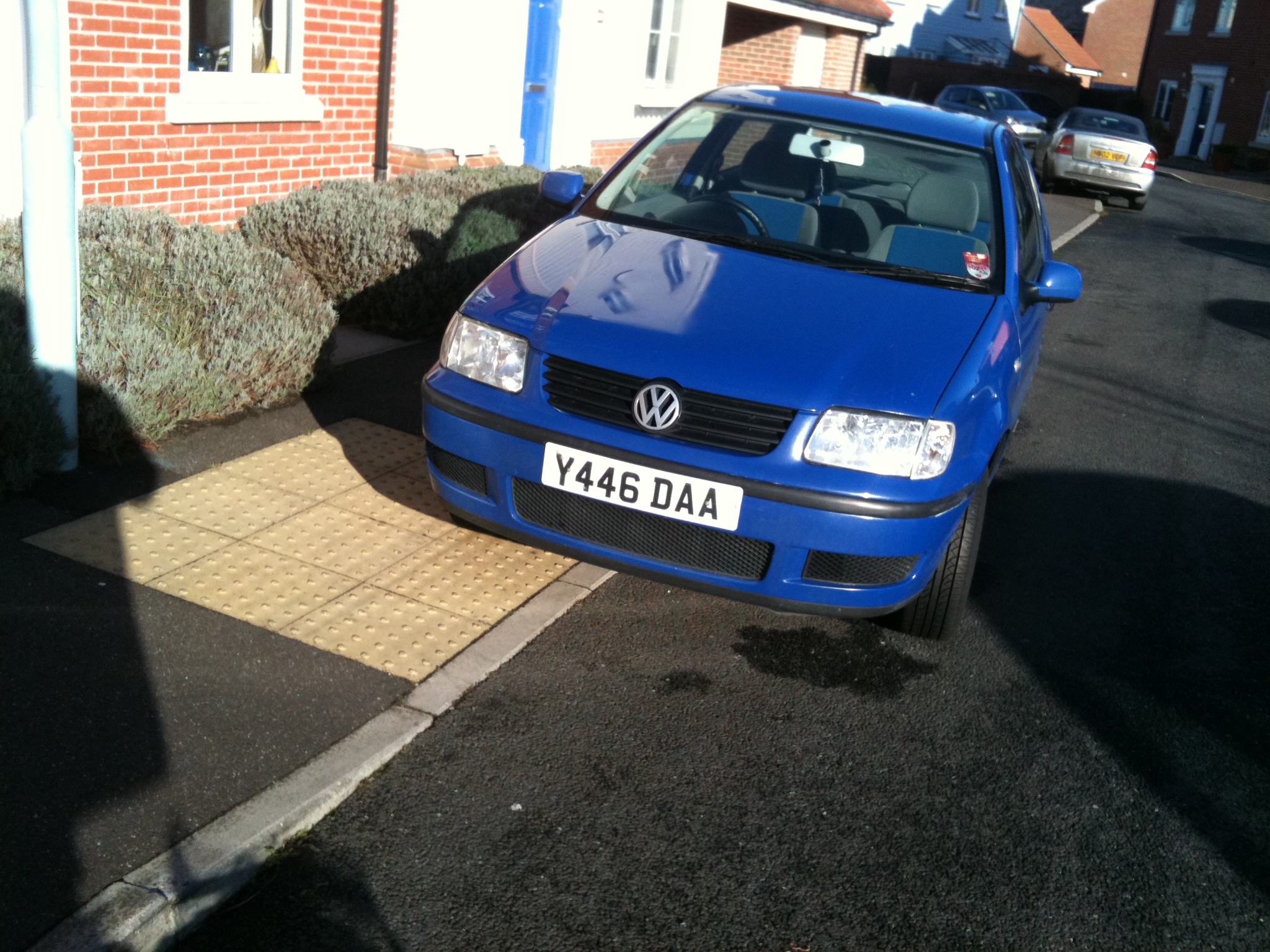
I can’t see why they ruling couldn’t be used in the case of people parking on the pavement requesting the keeper of the vehicle by post to identify who drove it onto the pavement. Not knowing who was using your vehicle is itself an offense. The only problem of course is that the it would kick off a huge stick about ‘cash cows‘, victimisation of drivers etc etc. The reality is that the existing regulations are barely enforced such as blocking a dropped kerb as shown below. As such it will continue to be our job to draw attention to the issue and keep up the pressure!

Blocking a dropped kerb


Down memory lane – 1980s information film

3 Mar

Here is a public information film that was made some time in the mid to late 1980s (the car has a 1981/2 plate on it). So… not a lot has changed in the intervening 25 years then.

I have also just been trying to track down an old public information film made with a young Tony Robinson for the National Institute for the Blind. I am sure it was him but I can’t find anything on the web about it at all now which is a bit strange. Can anyone help?